




News Information

What is the difference between buttons in different countries?
2022-04-19
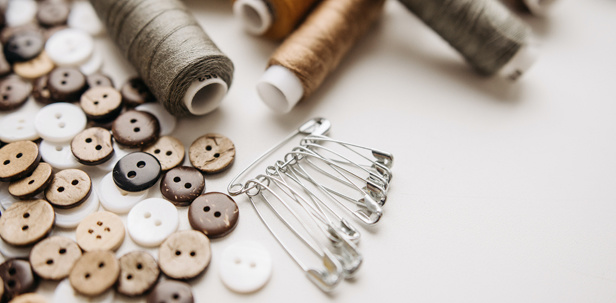
Buttons are circular pieces with eyelets that are sewn on one side of the garment and pass through the buttonholes on the other side of the garment to fasten the garment. It is a daily clothing item that humans often accompany. According to archaeological findings, as early as 4000 BC, the Persians could make buttons from small processed stones. The ancient Egyptians also made buttons of gold and silver, which were sewn around the collar as an embellishment; the ancient Greeks used buttons and loops on the shoulders to fasten the tunic. However, the decorative function of buttons at this time was greater than the practical value. It was not until the invention of buttonholes in the thirteenth century that the function of buttons was greatly improved. In addition, clothes were generally cut according to the shape of the human body at that time, and the function of buttons became very important. It is important, and the trend of fashion will be difficult to stop. In this way, buttons are also divided into high and low like people's background. The rich and powerful all sew valuable gold, silver or ivory on their clothes. Buttons with their own names to show their wealth and status, and even when they walk into the gate of heaven, they should leave the buttons engraved with their own names as a legacy to future generations. However, the flat-headed people have no such ability. They can only sew the cheapest things from animal bones or wood, and they do not have to think about what to contribute to their brothers and sisters, because they also need wisdom and creativity. The miracles of labor make up for the hardships of life. In the Zhou Dynasty of our country, the system of tops and bottoms has been adopted. Both men and women wear two pieces of clothing with tops and bottoms. The etiquette requirements are also quite strict. There are officials in the court who are in charge of making dresses. Civil and military officials must wear dresses when they are doing ceremonies. At that time, the use of clothing was relatively standardized, and the clothing system was quite complete. In the Zhou Dynasty, the "Zhou Li", "Book of Rites" and other books that reflected the Zhou Dynasty etiquette appeared in the "New" character, "New" is a knot that is intertwined with each other, that is, a knot. According to the copper engraved buttons of the Western Zhou Dynasty in my collection and the archaeological discoveries in my country, buttons were used in the Spring and Autumn Period and the Warring States Period. Among the Warring States cultural relics unearthed in Shizhai Mountain, Jinning, Yunnan, buttons with round, oval, animal head and irregular shapes have been made of orchid, apple green and light gray turquoise. Each has one or two small holes. Some are engraved with patterns, unique in shape, gorgeous and colorful, and have a wonderful waxy luster. In the collection of buttons now collected, there are still simple buttons made of small stones, shellfish, animal horns, walnuts and coconut shells. It can be seen that in the Western Zhou Dynasty, some people already used buttons. In the 14th century, the Chinese brought buttons to Europe, which was an exciting festival for Europeans who were still ragged. At that time, it was an honor and a privilege to be able to tie the undressed robe quite neatly, and the man no longer played with the cloth belt that was not very obedient and disrespectful, and his demeanor also followed. In order to show their wealth, some dignitaries use precious materials such as gold and silver, pearls, gems, diamonds, rhino horn, antelope horn, and ivory to make buttons. Because of the decorations, their attitude became a little arrogant. In France, there is a record that King Louis XIV used 13,000 precious buttons to make a royal robe. Those very beautiful women have few users, and they prefer to sit in the hall to receive friends and relatives after dressing up. At best, the buttons are hung on the waist and play the role of clothing, making it feel that it is just right for my identity. By the 16th century, among noble women, it was popular to sew a large number of buttons as knots and decorations from the elbows to the wrists, and from the neck to the waist. At the beginning of the 18th century, with the establishment of button processing factories in Britain, Germany, France and other countries, buttons with embroidery patterns shined on clothing with design concepts, and tin alloy buttons had replaced other products and became The buttons used by the public and the decoration of copper buttons on military uniforms make the beautiful uniforms shine. In short, during this period, button materials can be described as everything, such as shells, pearls, glass, crystal, leather, buffalo horn, tortoiseshell, bamboo and wood, etc. It is dazzling and less than 50 years have passed. There are cut steel buttons, which are carved with multiple facets on the steel billet, so they are bright, clean,
2022-04-19
“Promote Customer Value by Products” is our core values. The investment and operation related to R&D, technological upgrading and service is for the promotion of customer value and is also the brand value of Shunlong. Our company and customers make an alliance and are a value community of mutual promotion. We believe that the ancient and vigorous button manufacturing industry will be more brilliant like glittering buttons in the era of fashion, science and technology by virtue of the development of Yinlong and continuous technological reform.
Environmental Protection Concept: Nature, Harmony, Regeneration, Utilization
2022-04-19
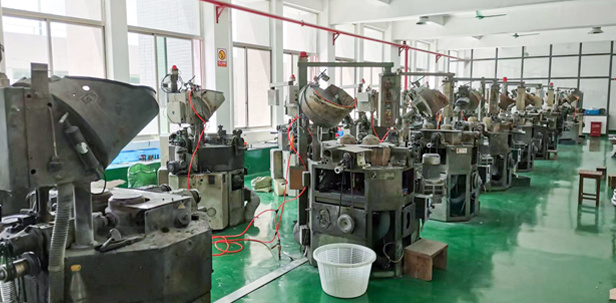
In the electronic era, people pay more attention to fashion, human orientation and environmental protection. As the domestic first-class button manufacturer, our company has made great achievements in the field of eco-friendly buttons by virtue of the core values of “Promote Customer Value by Products” and exceptional advantages. The non-toxic resin button, natural shell button, coconut button and plated metal button replace the common buttons, and win the favor of consumers owing to great varieties. Our products adapt to the demands of environmental protection and reflect the tenet of “Survival by Quality, Development by Credit”.
2022-04-19
“Dashun is located at the junction of Shanghai, Jiangsu and Zhejiang, within the jurisdiction of Xitang—millennium town, featuring flat terrain, densely-covered river network and ancient rhyme. It is a southern Chinese riverside town. In ancient times, it was the boundary of Wu and Yue, and was known as “the end of Wu and the corner of Yue”. It is found in the archaeological excavation of Liangzhu Culture Relic that Dashun, Wuxian Chenghu and Wujiang Meiyan all belong to the late Liangzhu culture. It is proved that Dashun was permeated by Liangzhu culture in the Neolithic Age 4200-5300 years ago. Through thousands of years of cultural accumulation and historic development, there are a large number of scholars and developed traditional industry. Xitang is a world-famous millennium town, and owns developed traditional handicraft industry, laying a humanistic foundation for Dashun as China’s “Hometown of Button”.
Dashun Button: China’s Hometown of Button, Brilliance.
2022-04-19
The “button museum” in Xitang displays a lot of buttons and button making machines in ancient and modern times. The small button has its unique rhythm and tells a beautiful and long button production history of Dashun. The button manufacturing industry of Dashun can be traced back to hundreds of years ago. In the 1980s, it entered a golden era. “Qiaotou Button, Dashun Master” reflects the history of struggle in button industry of Dashun. The innumerable diligent and wise Dashun people make a contribution to the button industry of Dashun. Now Dashun is honored as “China’s Hometown of Button” owing to their intelligence and hard work, and creates a more splendid future of domestic garment industry.
Contact Number:0573-8479920284798807
Address:No. 137 Kaiyuan Avenue, Xitang Town, Jiashan County, Jiaxing City, Zhejiang Province, China
Fax:0573-84798188
Email:webmaster@yinlongcn.com